




Thank you What a Story for encouraging our team and the blisfully wonderful experience people usually dread about - standing in front of the camera.
Let’s face an undeniable truth about our industry.
Corporate videos are almost always predictable.
Typically, the standard agency model is painfully rigid.
We visit an organization, conduct a few staged interviews, and gather some standard footage.
We return to the editing table, deliver the polished videos, and promptly move on to the next invoice.
There is rarely any structural depth or systemic integration with the client's internal culture.
That is exactly how things operate until a remarkably forward-thinking client comes knocking.
Our journey with Landis+Gyr began with a fairly typical onboarding call.
However, the client quickly presented a unique and highly intriguing requirement.
They did not just want a video.
They wanted genuine engagement.
The primary objective was clearly defined from minute one.
They aimed to uplift their employees' spirits after the grueling disruptions of the post-COVID era.
They needed to foster a deep sense of brand ownership across the entire team.
The actual videos were merely a functional by-product of this massive cultural exercise.
The client asked us to conduct an intensive workshop on scriptwriting and trial filmmaking for their employees.
The goal was to empower their own internal team to conceptualize and develop their own content.
I knew immediately that this was not going to be a regular corporate video campaign.
It required a complete operational pivot.
We put on our strategic thinking caps and started preparing a robust, first-of-its-kind educational curriculum.
The corporate world typically calls this a PowerPoint presentation.
I prefer to call it a fundamental blueprint for visual storytelling.
This material contained the absolute A to Z of filmmaking basics.
We built a systematic breakdown that started right from generating random conceptual ideas.
We then taught them how to line those ideas up and transform them into a rough draft.
We showed them how to structure a script by sorting out related pointers into a cohesive narrative flow.
And while we were at it, we deliberately threw in some highly tactical mobile filmmaking tips.
We also included several editing secrets for the enthusiastic pros among the staff.
We organized an unprecedented workshop on scriptwriting and filmmaking for the entire employee base.
Our team ran them through this presentation meticulously.
We then opened the floor and answered all the questions they had.
Some questions were completely usual, while others were fascinatingly unusual.

THE BIG BANG
I established a strict timeline to maintain operational momentum.
We gave the employees a couple of weeks to revert back to us.
They had the freedom to submit their concepts, scripts, or trial videos.
We wanted them to use whatever format made them most comfortable.
Then, we got a call from the client confirming that all the entries had been officially submitted.
I was realistically expecting around twenty participants out of the hundred who originally attended the workshop.
I apologize for being entirely too optimistic about standard corporate participation rates.
However, to our absolute surprise, the response was completely overwhelming.
We had close to forty-five participants who submitted comprehensive scripts and video entries.
What came as the biggest and sweetest shock was the sheer variety of the submissions.
These employees systematically covered every single topic a corporate entity could remotely think of.
They wrote about work culture, workplace diversity, and emerging technology.
They tackled work-life balance, community impact, and the list went on and on.

We were so genuinely amazed by the volume and quality that we were temporarily at a loss for what to do next.
We had barely one week remaining before the scheduled shoot.
We had a massive, interesting puzzle sitting right in front of us.
We buried ourselves in deep thought and literally hit a structural wall.
I forced the team to step back and review the data systematically.
We decided to rewatch the entries again and again until a clear pattern emerged.
Finally, we developed a highly pragmatic strategic idea.
We needed to segregate the individual videos by overarching themes.
We would then move people around based on their demonstrated strengths in the trial videos.
Luckily, our master contract was originally scoped to produce exactly four videos.
So, we selected four definitive themes.
We chose Diversity, Technology, Life Beyond Work, and Leadership Messaging.
The client was equally excited by this strategic pivot.
We were not shortlisting or eliminating anyone from the process.
We were keeping our fundamental promise to make the entire campaign as engaging as humanly possible.
Considering the rapidly increasing logistical elements of the video production, we had to adjust our timelines.
We reached the client location well ahead of the promised schedule.
Our team spent three times the usual amount of prep time directly with the fifty-four exact participants.
We also spent exhaustive hours analyzing the specific locations where we were going to shoot.
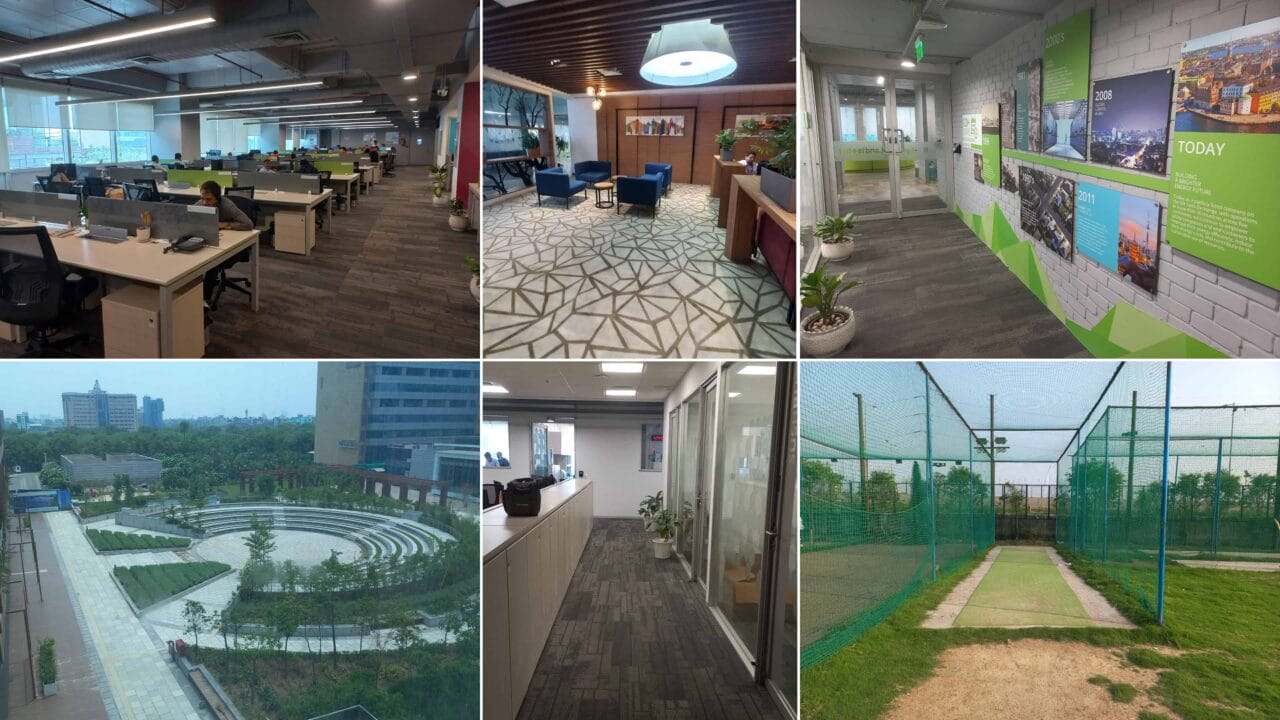
The energy levels and the sheer cooperation we received from the staff was unbelievable.
However, what was significantly more unbelievable was the operational freedom we secured.
We received a complete freehand from the client to go ahead uncompromisingly with our creative vision.

THE CREW
Let us talk about the crew.
Pulling off a production of this specific scale requires a completely flawless and elite team.
We went into our network and hired the absolute best resources available.
Our crew was equally excited about the various concepts of the campaign.
This level of crew investment is actually quite unusual in standard corporate contracts.
We assembled a specialized unit of twenty seasoned professionals.
They were completely ready to support our core vision.
We had dedicated experts for camera operation, lighting design, and sound recording.
We brought in professional makeup artists, data conversion specialists, and a behind-the-scenes documentary unit.
We also locked down comprehensive transport and catering logistics.
I made a very specific hardware decision for this project.
We chose the BlackMagic 6K Pro as our primary camera system.
I did not want to intimidate the employees with a massive, heavy cinematic camera setup.
However, we paired it with standard high-end cinema lenses.
This ensured we squeezed the absolute maximum visual fidelity out of a smaller, less threatening footprint.
THE STRATEGY
Once the gear was locked, we had to finalize the execution strategy.
Realizing we were no longer shooting a regular one-day corporate campaign, our team had to build a clear-cut operational blueprint.
We had to manage fifty-four untrained participants alongside a twenty-member professional crew.
We had massive amounts of professional gear moving through a fully functional working corporate space.
We needed to achieve all of this with the absolute least possible physical movement.
The entire shoot was meticulously planned for exactly six days.
I decided to target the absolute biggest logistical hurdle on the very first day.
This was the Diversity video.
It featured thirty-one separate participants packed into a tight one-minute video.
At the same time, we had to shoot the outdoor sequences for the Life Beyond Work segment during the early morning and late evening golden hours.
This complex web of requirements forced two major structural changes to our standard shooting schedule.
First, we mandated an extension of our working hours.
We moved from our regular eight hours per day to a grueling twelve hours per day.
Second, we implemented a strict floor plan shifting protocol.
We restricted our movements to shooting employees on exactly one single floor per day.
The first schedule adjustment was absolutely critical for maintaining momentum.
It helped us keep the pacing of the shoot aggressive.
It also allowed us to smoothly scatter the employees into designated first-half and second-half time slots.
This minimized their waiting periods and caused the least possible intrusion into their daily working hours.
We formed dedicated WhatsApp groups to manage the micro-logistics.
We selected two reliable volunteers from each group for every specific video.
These volunteers acted as our absolute operational saviors.
They seamlessly coordinated with their respective teammates behind the scenes.
We built a staggered pipeline for hair and makeup.
The subsequent participant’s makeup was entirely arranged and completed during the current participant’s actual time on camera.
This completely eliminated turnaround dead time.
The second strategy of shooting one floor per day was a massive efficiency multiplier.
It helped us intelligently rearrange the script components based on physical proximity.
We only moved to the adjacent or nearest location within the same floor plan.
This saved us the endless, wasted time of moving heavy equipment up and down a multi-story office building.
It drastically reduced workplace disturbance.
It also shrank the critical timing between individual setups.
As a direct result, we were actively rolling cameras for at least sixty to seventy percent of the total day.

I have massive respect for our internal agency team.
They worked extensively over their weekends just to prepare these meticulous floor plans and shifting schedules.
THE UNPREDICTABILITY
However, even the most rigorously planned shoots suffer from the impact of the imperfect real world.
This massive production was certainly no exception to that rule.
We were constantly peekabooed by torrential monsoon rains.
This severely threatened our ability to shoot the critical outdoor sequences for the employee hobbies section.
We had to come up with an instant, pragmatic pivot plan.
We essentially had to scrap elements of our originally well-prepared schedule on the fly.
We created an instant backup plan to keep the cameras rolling.


Thanks to the unparalleled support from both the participants and our passionate crew, we navigated these hurdles seamlessly.
We systematically identified the logistical blind spots and executed the complex sequences in an incredibly smart way.
We also had to manage the senior leadership team.
They were constantly bombarded with critical, high-stakes corporate meetings throughout their busy days.
However, they were still kind enough to accommodate a decent amount of dedicated time for their filming slots.
We were shooting the dedicated Leadership Messaging segment during these narrow windows.
Once again, we had to strictly enforce our floor-by-floor movement strategy to accommodate the massive crew and equipment footprint.
All three of these initial videos had to be shot entirely uncompromisingly.
This sheer dedication to quality inevitably ate up a decent amount of the scheduled slot timings for the final video.
This final deliverable was centered around the Technology theme.
We were falling behind schedule.
It made us quite unsure whether we would actually be able to shoot the required material in time.
Luckily, I approved the immediate hiring of some extra strategic resources.
This allowed us to successfully finish off the Technology video right on the very last day.
We crossed the finish line largely due to the unyielding support of the internal team volunteers and the enthusiastic participants.
Executing this massive set of four unique videos required a level of grueling planning and coordination that we had rarely seen before.
It tested our operational efforts in multiple, demanding ways.
For instance, we needed authentic sporting locations.
We approached a nearby local college.
They were highly accommodating and granted us official permission to utilize their basketball and cricket courts for the hobby sequences.
This was a logistical undertaking we had never attempted before for any standard corporate shoot.


And I certainly cannot fail to mention the kitchen setup required for one of the specific hobbies.
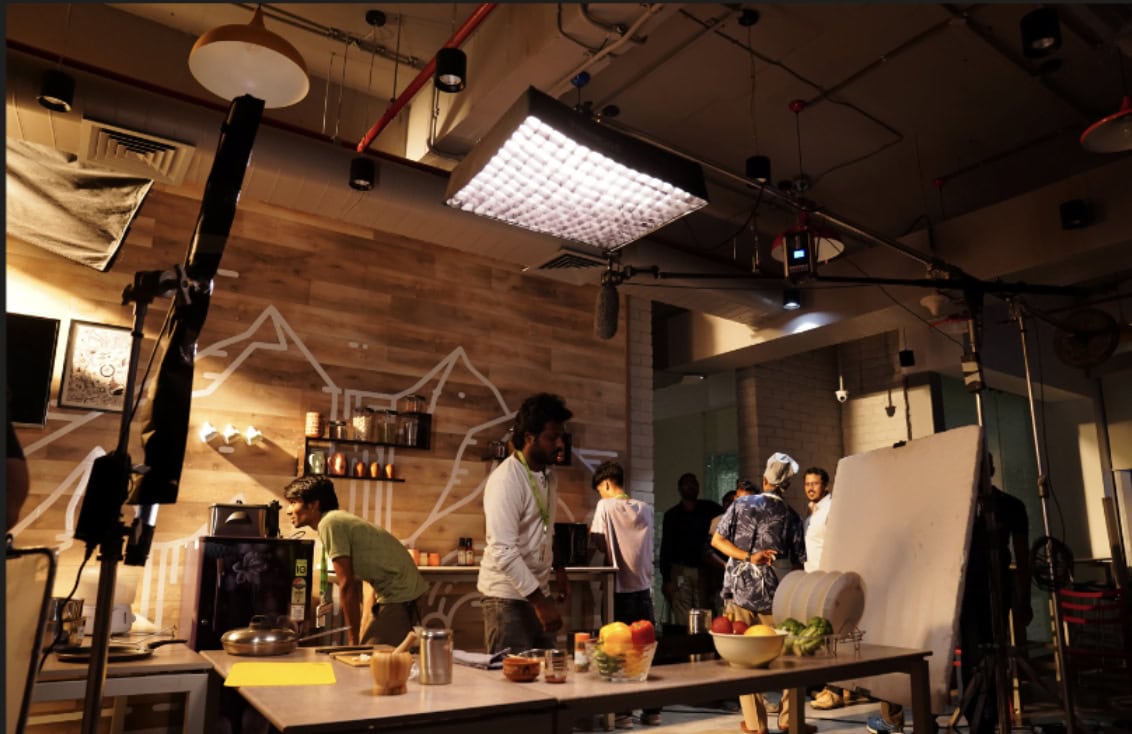
This requirement forced our team to rapidly explore multiple complex staging options.
We looked into renting nearby AirBnb stays.
We scouted modular kitchen showrooms.
We even evaluated utilizing a reputed five-star hotel’s active running kitchen.
A couple of the employees were extremely kind enough to offer their own personal houses for the shoot.
However, the travel distance factor was a massive operational issue.
During active production hours, moving a crew and equipment of this scale across town destroys both time and effort.
Both of those resources are critically finite.

We simply had to think smart and work incredibly hard.
We instituted a policy of putting in far more off-the-shoot prep hours to guarantee less during-the-shoot wasted hours.
Our team engineered a brilliant, pragmatic idea.
We decided to create a functional set entirely from scratch right inside their existing cafeteria space.
Our art department team went out shopping for the majority of the necessary kitchen items.
We strategically utilized some of the existing physical props borrowed directly from their internal food vendor.
We created a highly effective mix-and-match staging environment.
It perfectly balanced time, effort, and budget constraints.

At the absolute end of the sixth day of shooting, our team was completely sore and physically exhausted.
But we were also immensely satisfied and deeply proud.
We had successfully handled fifty-four non-professional participants.
We had generated four totally diverse videos that boasted truly top-notch production quality.
However, I knew perfectly well that this was only the completion of the physical production phase.
We had exactly six terabytes of raw recorded data waiting for us back at the post-production facility.
But before we aggressively moved onto the post-production phase, the team absolutely deserved a moment of celebration for pulling off this extraordinary logistical feat.
THE POST-PRODUCTION IS NOT FOR JUST EXPORTING THE VIDEO, IT IS FOR ENHANCING.
My perspective on post-production is simple.
Post-production is never just for assembling and exporting a video.
It is a strictly controlled environment built purely for enhancing the foundational footage.
We reached our agency base and immediately started compiling the video timelines one by one.
We systematically passed these individual timelines to our dedicated music team.
I knew that sharing all four massive videos together at the exact same time would only create absolute operational confusion for the audio department.
While the primary music tracks were almost completely done, we hit a realization.
A couple of the individual videos could absolutely benefit from far more powerful, louder music to match their specific genre pacing.
We immediately informed the client about this creative pivot.
We explained that some of the videos might need to be completely re-recorded just for the vocal tracks.
They were perfectly okay with this development.
In fact, they were highly excited by our dedication to quality.
So, our core team immediately flew right back out to the client location.
Thanks to our rigorous logistical prep, we quickly located a professional voice recording and dubbing studio just five minutes away from their main office.
We brought the employees in and fully re-recorded their critical voiceover lines.
To our sheer astonishment, these everyday corporate participants delivered their voice dubbing entirely on par with seasoned star actors.
These brand-new, isolated voice tracks drastically enhanced our ability to execute the final music mixing.
The overarching instrumentation was able to come out far more clear and intensely peppy.
The vocal stems were entirely free from problematic on-location sounds.
During production, we had been forced to move camera sliders and deal with unavoidable ambient office noises.
Now, the audio mix was flawlessly clean.
THE DELIVERY
We immediately sent the pre-final cuts over to the client for their official review.
The client was quite heavily impressed.
They were thrilled not just with our stringent technical parameters, but also by the human element.
The way their own employees delivered flawless on-screen performances while appearing quite comfortably at home in front of the lens was exactly what they wanted.
We received very minor feedback concerning just a few standard branding elements and their specific logo choices.
Following those quick revisions, our videos officially secured their final approval.
We instantly forwarded the locked picture to our dedicated color grading team and our final audio mixing team.
These finishing departments enhanced the finalized videos on a whole new technical level.
If you have followed the process this far, it is quite clear you are keen to see the final functional results.
After all, they are the literal, tangible fruits of our highly systemized labor.
CLIENT REACTION
The final critical test was the client reaction.
We had the global management team actively present at their main campus for their highly anticipated All Employees Meet.
Fortunately, they were not just kind enough to carve out their valuable time to comprehensively review the final outputs.
They were also heavily impressed by the sheer authenticity, the cultural vibe, and the raw energy of the finalized videos.
Yes, you read that correctly.
Our meticulously planned internal video campaign officially went global.
It completely bypassed the originally scoped India-only release plan.
KEY TAKEAWAYS
Here are the absolute key operational takeaways.
To all of our future clients, or quite frankly, anyone’s future clients.
You must actively believe in the core talent of your chosen video agency.
You must grant them genuine creative freedom.
Encouraging an elite team to think outside the standard corporate box is the exact mechanism that transforms a merely good video into something truly exceptional and culturally sticky.
For our own internal agency, our direct market competitors, and absolutely anyone currently considering B2B video services.
The rule is simple.
When you secure a client, particularly one who is both strategically competent and supportive, you must dedicate yourself fully to their overarching organizational needs.
A supportive client is an absolute rarity these days.
Strive relentlessly to engineer a verifiable win-win situation for both your operational agency and your client's business.
If achieving massive mutual benefits isn't immediately feasible, focus all your systems on making it a definitive win for your client alone.
That execution, in and of itself, is your ultimate professional victory.
Credits: Ganesh & Divya (L&G team), Vikas Tiwari, Seshu, Antonio, Vasu, Jesvin, Tushar, Parth, Sri Murali, Srik Varrier, Sibi Joseph, Bhavesh, Anuj, Varun, Arun, Param, Dinesh, Nawaz, RamBachan.


