





Testimonials are statements from customers that share their experiences with a product or service. For businesses, testimonials play a critical role in building trust and credibility by providing social proof that influences potential buyers.
When you see positive testimonials, you feel more confident about making a purchase.
Identifying genuine testimonials is essential in a market where fake reviews mislead consumers and damage trust in business feedback.
Fake or manipulated testimonials undermine the value of honest opinions, making it harder to separate real experiences from marketing tactics.
This article focuses on the importance of genuine testimonials and offers strategies to verify their authenticity.
Understanding the Impact of Testimonials on Consumer Trust
Testimonials influence buyer behavior by serving as social proof, reassuring potential customers that a product or service meets expectations.
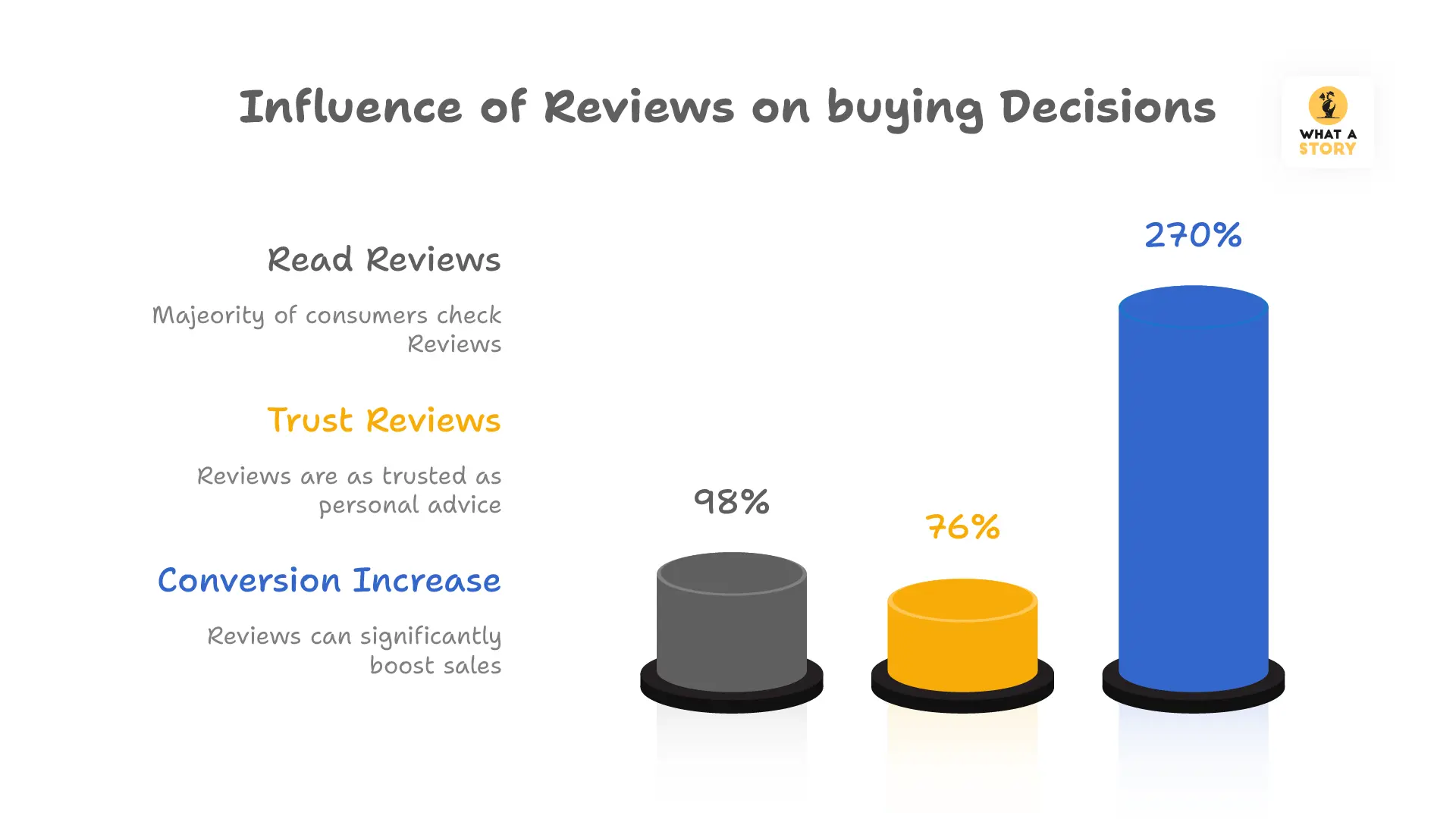
These findings demonstrate how testimonials directly influence purchasing behavior and reduce buyer hesitation.
When you see positive feedback from real users, it creates a sense of reliability and reduces perceived risk. This directly impacts your decision-making process, making you more likely to choose a brand with strong customer endorsements.
The psychological effect of positive reviews
The psychological effect of positive reviews strengthens consumer confidence by building trust. People rely on others' experiences to validate their choices, especially in unfamiliar markets or with high-value purchases.
Positive testimonials trigger emotional responses like reassurance and satisfaction anticipation, encouraging quicker and more confident buying decisions.
The principle behind this behavior is widely recognized in behavioral science. In the book Influence, Dr. Robert Cialdini explains that people determine what is correct by observing what others are doing - a concept known as social proof. Testimonials tap directly into this psychological mechanism, reinforcing confidence through shared experiences.
How businesses benefit from authentic testimonials
Businesses that use genuine testimonials often see higher sales and improved credibility. Amazon sellers who display verified purchase reviews usually have better conversion rates.
Local service providers, such as plumbers or dentists, gain trust by featuring detailed client testimonials on their websites.
The feedback loop of authentic testimonials
Genuine testimonials create a cycle. Happy customers share honest experiences, which improves brand reputation and attracts new buyers.
Understanding this dynamic helps you realize why confirming the authenticity of testimonials is so important for your consumer decisions.
Common Signs and Patterns of Fake Testimonials
The problem of fake testimonials is more widespread than many consumers realize. Industry analysis suggests that around 30% of online reviews may be inauthentic in certain categories, highlighting the importance of careful evaluation. Source:
1. Analyzing the language and detail in testimonials
Identifying fake reviews begins with an analysis of testimonial language. The way a review is written often reveals clues about its authenticity.
Real testimonials include detailed product feedback, highlighting specific features or aspects of the service that stood out to the user.
Here is an example of a real testimonial:
These details might include how a feature performed under certain conditions, comparisons with previous experiences with similar products, or specific benefits and drawbacks observed during use.
Fake testimonial signs usually show up as generic, vague, or overly enthusiastic statements that lack substance.
For example, a suspicious review might say, "This product is amazing! Best purchase ever!"
Such a statement lacks any concrete information about what makes the product valuable. It sounds scripted or exaggerated, often crafted to influence without offering real insight.
Authentic user feedback often includes honest positives alongside minor criticisms or suggestions for improvement.
Genuine review characteristics include:
- Use of personal pronouns like "I" or "my experience" indicates firsthand use
- Descriptions of how the product fits into daily routines
- Mentioning specific names, models, or versions
- Balanced tones that include both praise and critique
Suspicious review traits often involve repetition of marketing phrases, unnatural enthusiasm, or multiple short reviews repeating similar language across different users.
Determining if a product review is real hinges on spotting these subtle but telling differences in language and detail.
Paying close attention to whether a testimonial conveys authentic user experiences through specific examples helps separate genuine voices from promotional noise.
2. Checking the timing and review patterns for suspicious activity
Timing plays a crucial role in identifying fake testimonial signs. A sudden surge of multiple positive reviews within a short timeframe often signals suspicious review spikes. This pattern can indicate coordinated efforts to boost a product’s reputation artificially.
Key points to consider when performing review timing analysis:
- Unusual clustering of positive reviews: Genuine user feedback spreads out over time, reflecting real purchase cycles and experiences. A rapid burst of glowing testimonials is a red flag.
- Pattern recognition in testimonials: Look for repetitive phrases or similar language used across reviews posted closely together. This suggests scripted or manipulated content.
- Correlation with marketing campaigns: Some businesses time fake reviews to coincide with promotions, skewing perception during critical sales periods.
Understanding these suspicious review traits helps you differentiate between authentic and fabricated feedback.
Identifying fake reviews requires attention to both testimonial language analysis and their chronological distribution, revealing attempts to deceive consumers through timing manipulation.
3. Checking reviewer profiles for signs of authenticity
Genuine testimonials typically come from reviewers with credible and traceable backgrounds. To spot fake reviews, it's important to verify reviewer profiles.
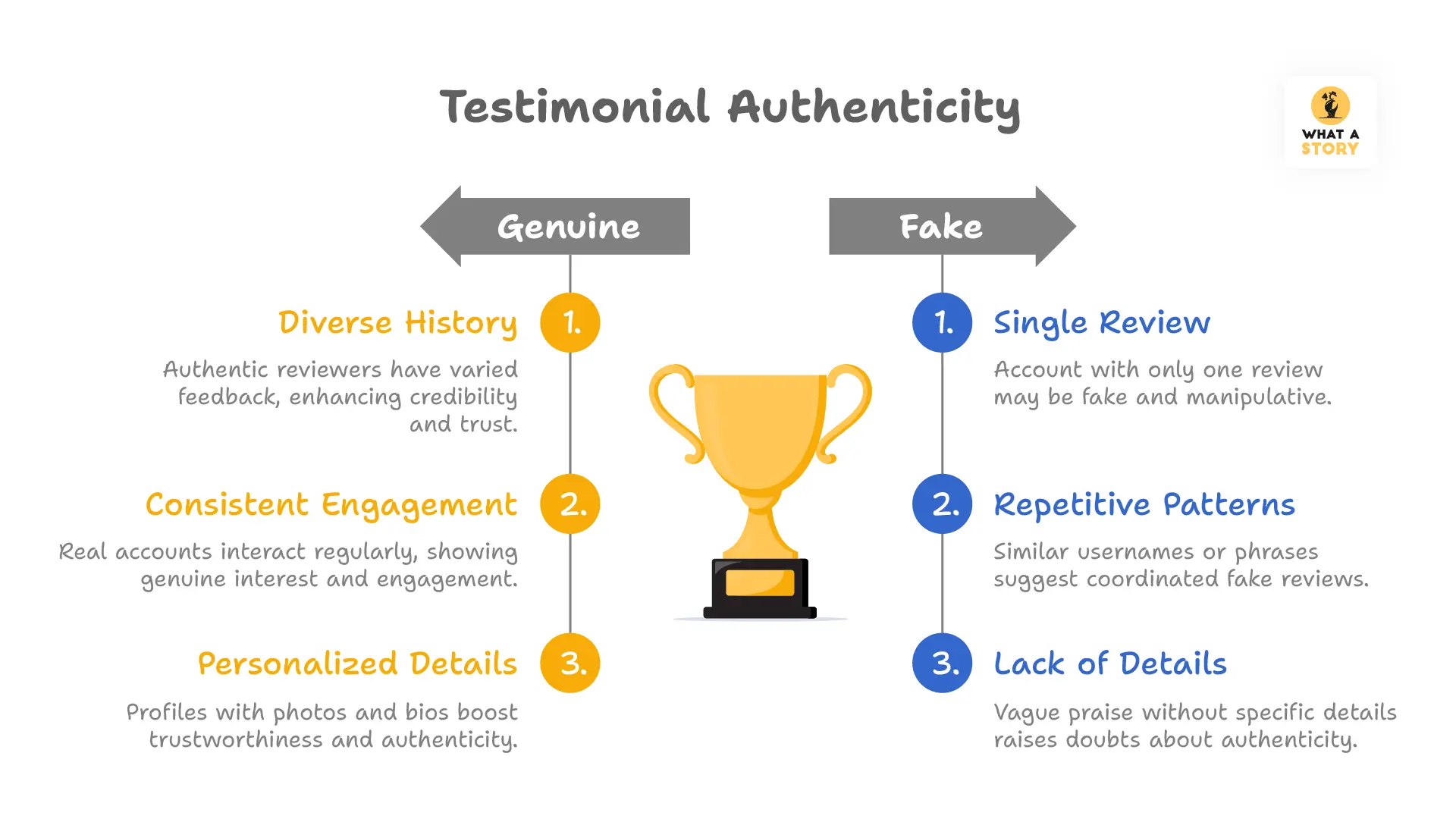
By closely examining reviewer profiles, you can improve your skills in analyzing testimonial language and gain insights into how to determine whether a product review is genuine.
4. Using online tools to efficiently detect fake reviews
The rise of specialized online tools designed for identifying fake reviews has made it easier to spot signs of fake testimonials.
These fake review detection tools use algorithms to analyze suspicious review traits such as short, generic, or overly dramatic language lacking specific details, a lack of personal experience, or a sudden surge of multiple positive reviews within a short timeframe.
Platforms like ReviewMeta.com provide detailed testimonial language analysis and assess the overall credibility of product reviews by filtering out suspicious patterns.
They compare reviews against known markers of fake content, including repetitive phrases, unusual reviewer activity, and inconsistent rating distributions.
Other tools scan reviewer profiles for authenticity indicators and cross-examine review timestamps to spot clusters of coordinated feedback.
Using these resources helps you focus on genuine review characteristics and avoid falling prey to misleading testimonials.
Knowing how to tell if a product review is real becomes easier when you combine automated analysis with your own judgment about the depth and specificity of the feedback.
This approach strengthens your ability to find if testimonials are legit.
5. Comparing testimonials across multiple platforms for consistency verification
Checking testimonials across different websites and social media channels offers valuable insight into their authenticity.
Fake testimonial signs often appear when feedback is inconsistent or contradictory between platforms.
A cross-platform testimonial comparison helps you spot suspicious review traits such as short, generic, or overly dramatic language and sudden surges of positive reviews on only one site.
When you observe consistent feedback verification - similar detailed product feedback and genuine review characteristics appearing independently on several platforms - it strengthens the credibility of those testimonials.
For example, if a product consistently receives praise for a particular feature on Amazon, Google Reviews, and independent blogs, it suggests these are not fabricated.
Differences in language style may occur naturally based on platform norms, but the core experiences should align.
Using this method complements testimonial language analysis by revealing patterns missed when relying on a single source. It sharpens your ability to find if testimonials are legit and tell if a product review is real.
6. Assessing video testimonials for authenticity
Video testimonials present unique challenges. Unlike text-based reviews, videos combine visual, auditory, and emotional cues that can be manipulated to create a convincing but fake testimonial. Identifying fake video reviews requires careful observation.
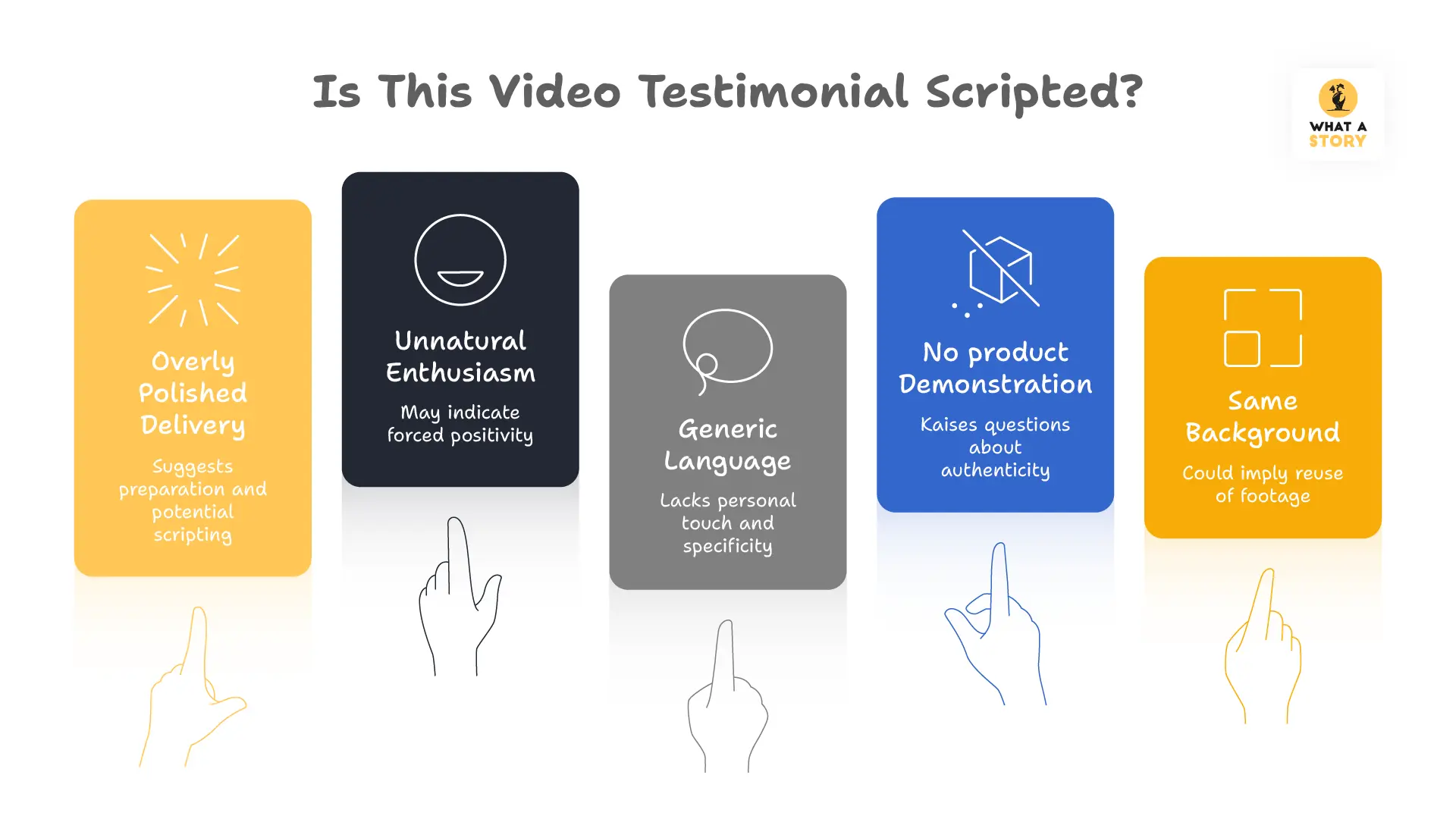
Detailed product feedback remains crucial even in video formats. Genuine review characteristics include mentioning specific features, demonstrating product use, or sharing unique outcomes.
Video testimonial verification benefits from combining testimonial language analysis with visual scrutiny to distinguish authentic feedback from fabricated endorsements.
Regulatory Guidelines Against Fake Testimonials and Consumer Reporting Mechanisms
The Federal Trade Commission enforces strict policies to ensure honesty in advertising, including testimonials.
Their endorsement guidelines prohibit false or misleading reviews and require that testimonials reflect honest opinions and real experiences.
The FTC has recently intensified scrutiny on fake reviews and undisclosed incentives, reinforcing transparency in digital marketing. Official Guidelines
Key highlights of the FTC guidelines on testimonials include:
- Testimonials must reflect the honest opinions, findings, beliefs, or experiences of the endorser.
- If a reviewer receives compensation or any incentive, this relationship must be clearly disclosed.
- Companies cannot fabricate experiences or manipulate testimonials to mislead consumers.
Consumers play a vital role in upholding these legal rules for honest reviews. Recognizing signs of a fake testimonial helps protect yourself and others from deceptive marketing. Platforms like Google and Amazon provide mechanisms for reporting suspicious reviews.
Navigate to the review in question, use the “Report” or “Flag” option to submit concerns about authenticity, and provide details that support your suspicion, such as repetitive language or questionable reviewer profiles. Active consumer participation maintains a trustworthy ecosystem where genuine feedback thrives.
Understanding spotting fake reviews techniques empowers you to challenge misleading content effectively. This vigilance also applies when questioning if video testimonials are fake, helping maintain integrity across all formats.
Conclusion
Knowing how to find out if testimonials are legit empowers you to make smarter buying decisions.
Use the strategies discussed:
- Analyze language and details carefully
- Monitor timing and review patterns
- Inspect reviewer profiles for authenticity
- Utilize online tools for quick checks
- Compare feedback across multiple platforms
Stay vigilant and question overly perfect or generic praise. Trust builds over time through consistent, genuine experiences shared by real users.
Your awareness protects your choices and helps maintain honest review ecosystems online. Keep these practices in mind every time you rely on testimonials to guide your purchases.
Note:This article was reviewed by Mayank Goyal, an SEO professional working with B2B SaaS and video production brands, with experience analyzing user-generated content patterns and trust signals in search results.


